The True Cost of Pride: A Series That Almost Didn't Happen
Updated: Aug 1
The first of a four part series. This piece is a personal essay on what eighteen years of hiding in plain sight actually cost me, and what it took to finally stop.
I told myself that in honor of Pride Month, I would make a series of four posts, highlighting different elements of my identity. As you can see, this is the first one, and it’s already the third Sunday. I’d like to say it’s because my life was really busy. The truth is I was scared, and writing about vulnerability was just as scary as facing the thing I was avoiding. I came out relatively early in life, which I am always reminded of whenever the conversation of my identity comes up. I watch now knowingly at the widened eyes and raised eyebrows each and every time I tell a new person that I’ve consciously known who I was since I was twelve years old. It used to make me extremely uncomfortable, dreading what would likely be a completely inappropriate follow-up question. Eighteen years later and I still brace whenever the conversation comes up.
In my early twenties, I hated the use of the word “partner”, I always felt like it was a way to make queer relationships more palatable in heteronormative settings, which if we are being completely honest, is all settings. I would quip that neither me or my girlfriend played tennis, so reducing her to a “partner” seemed to be another way for me to hide the person I loved, which is something I had been asked to do since I came out. Hide. Conceal. It was reinforced that there were parts of me that were meant to exist in private. It was no one’s business. I sincerely believe that while these directives were incontestably homophobic, they were not consciously ill intentioned. There was a concern for my safety from those around me who existed in a world before Katy Perry released that song. While not intentionally harmful, the impact was just as damaging.
For nearly a decade, I believed that I was less deserving of a complete love because asking any woman to do that was asking too much of her. I was comfortable being hidden, understanding about why we could never share with our families. It wasn’t until I was in my late twenties and someone asked me why I had such a strong aversion to PDA that I had to confront the limiting beliefs that I still wore. A friend (straight male) looked at me and said, "you know, if I didn’t know you, I would think you are pretty conservative." Initially, I scoffed and rolled my eyes because that felt like more of an insult than any other thing I’ve heard about myself. Then he served a dagger that I could not counter—he looked at me, earnestly, and said something along the lines of, "I know you love the women you are with, I just have never seen it. I have never seen you so much as hug a woman in public." Despite my confrontational nature, there was no retort because he was right. Of course, over the years, I attended pride events, I completed women and gender studies courses in college, I disclosed my sexual identity in public, championed for the inclusivity of all even when it wasn’t the safest thing to do and still, I was afraid to hold a woman’s hand in public.
I know for some readers that will seem dramatic considering that we are a decade removed from the federal legalization of same-sex marriage, there is now more queer representation in media, and society has seemingly moved towards acceptance. While those adjustments are great and often celebrated by the collective community, there is still this residual fear which every now and again is confirmed. Whenever I travel to a new country that may be less tolerant, whenever someone asks how I know my partner, whenever I am in a new environment and I don’t have a feel for what type of crowd I am in front of, whenever political tides turn. As a woman, this fear is magnified due to the obvious concerns around navigating a world where gender-based violence continues to be rampant. Looking at all of these things combined, I was still holding the belief that asking a woman to stand against all of that with me was asking for too much.
My intention with this post is to be vulnerable in a way that may force another person to reassess their relationship with harmful beliefs. For years, I thought not showing interest in women in public equaled safety—I knew who I was, there was no need to remind the world every chance I got. But that’s not my voice. It belonged to the voices of people who thought their comfortability was more important than mine, who felt their version of love was somehow more pious, more deserving of being highlighted. I then became so enraged with myself that I subconsciously had been doing their work all along. Sure, there are times when concealment is the safest course of action and the threat of physical retaliation is very real and should not be trivialized however, there are settings where I am safe and simply not behaving like it.
This realization forced me to confront a wall that has been in place since 2007. It forced me to realize that I had not been loving completely because I still did not completely love myself. I could not be the spokesperson for self-love and confidence while quietly absorbing the belief that I was a liability to anyone who chose me. That was the true cost—years of quietly editing myself down to a version I thought would be easier to love.
I thought back to every time a romantic partner mentioned that I felt far away, and I had been confused. I saw it now.
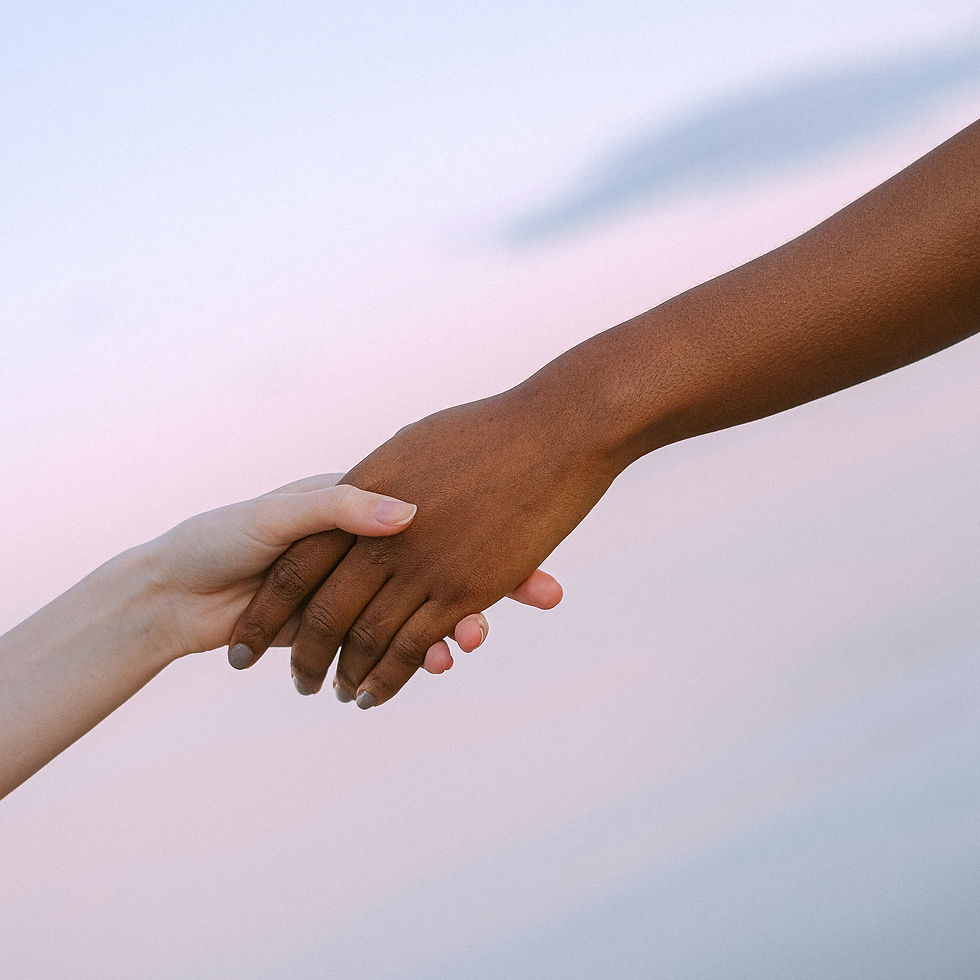
It wasn’t until I was with my current partner, and we were having the same conversation. I was a different person at home than I was outdoors. Without being privy to anything that occurred in my previous relationships or what took up an annoying amount of real estate in my own mind, she asked, “Why don’t you hold my hand?” I sighed—finally ready—and gave her the real answer instead of the evasive one I’d perfected. Then I tried it. I held her hand for a few blocks during a stroll. I braced for stares. There weren’t any. The anxiety lingered anyway.
It became a muscle I had to exercise—being seen. Taking up space as a partnered queer woman and realizing the beauty of what that meant. Once the realization hit me, I became unburdened by the past trauma, I stopped letting it consume me and focused on the now. There was a woman who loved my whole self and allowed me to reciprocate. This inspired me to reevaluate a lot of the self-limiting beliefs that I clung to. It reignited my passion for writing in an unexpected way and helped me to build more authentic relationships without bracing. I chose to focus on the people who loved me instead of those who loathed me for something outside of my control.
This post is not meant to be a downer and to clarify, I love who I am. This is meant to highlight the fact that at times how we see ourselves and how we think the world wants to view us are at odds, and that you being your truest self should always win. Whether you are LGBTQ+ identifying or not, there are parts of ourselves that do not make the edit that we share with the world. My personal journey has sharpened my perspective when it comes to identifying a person not operating at maximum capacity. Whatever you think is better left unsaid, unexplored, or muted, I assure you, there is someone who will benefit from candor, even if it is just you.
I am aware that this audience is filled with some of my strongest allies, so this isn’t a critique of how you’ve shown up for me—it’s a gentle nudge. Check, every so often, what you’re editing out to be easier to love. Take up space. Hold a woman’s hand, metaphorically or literally.
I bet twelve-year-old me is pretty happy I finally did.
Comments